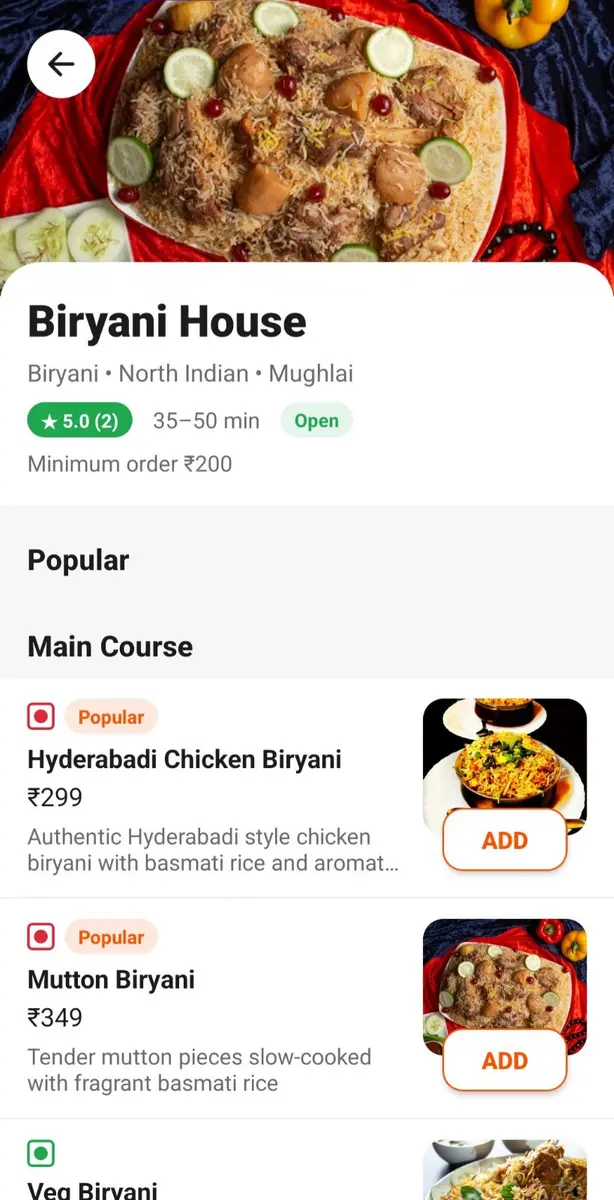
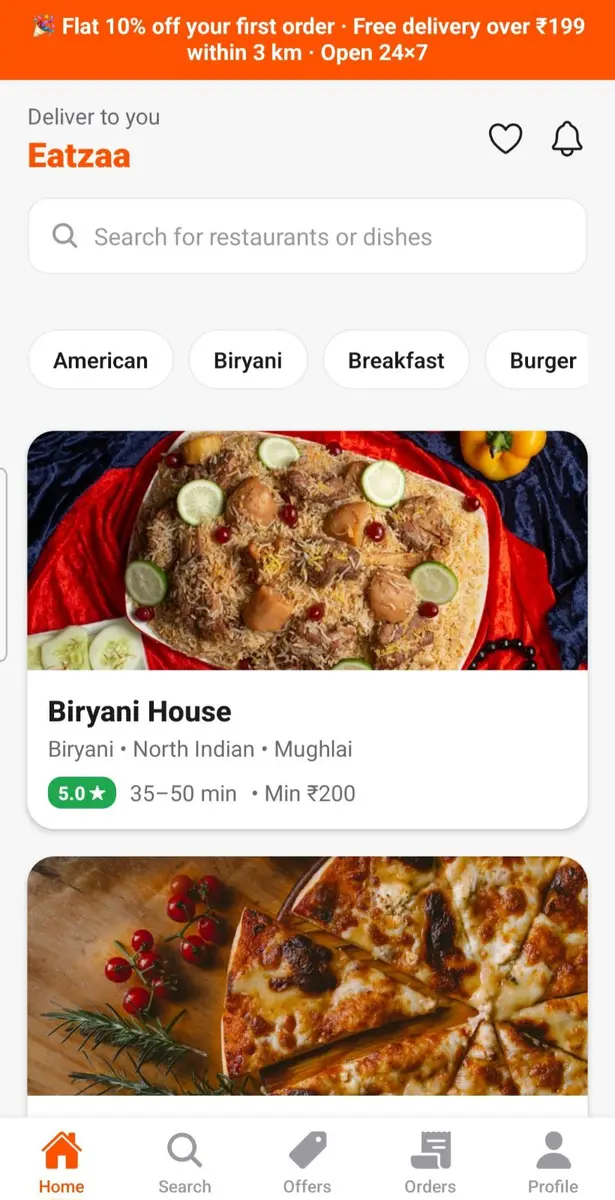
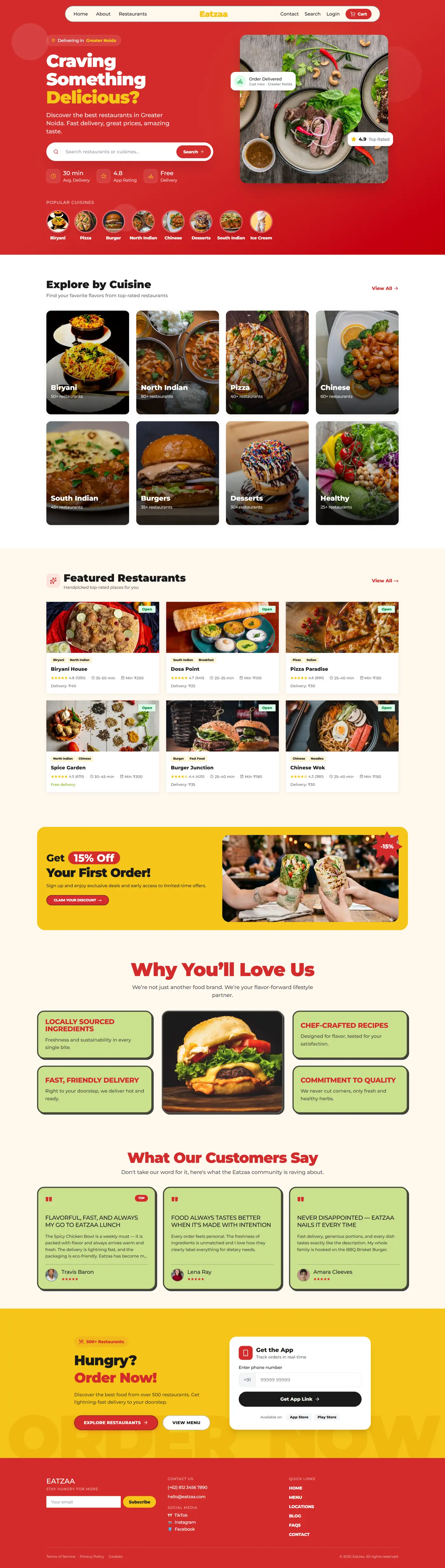
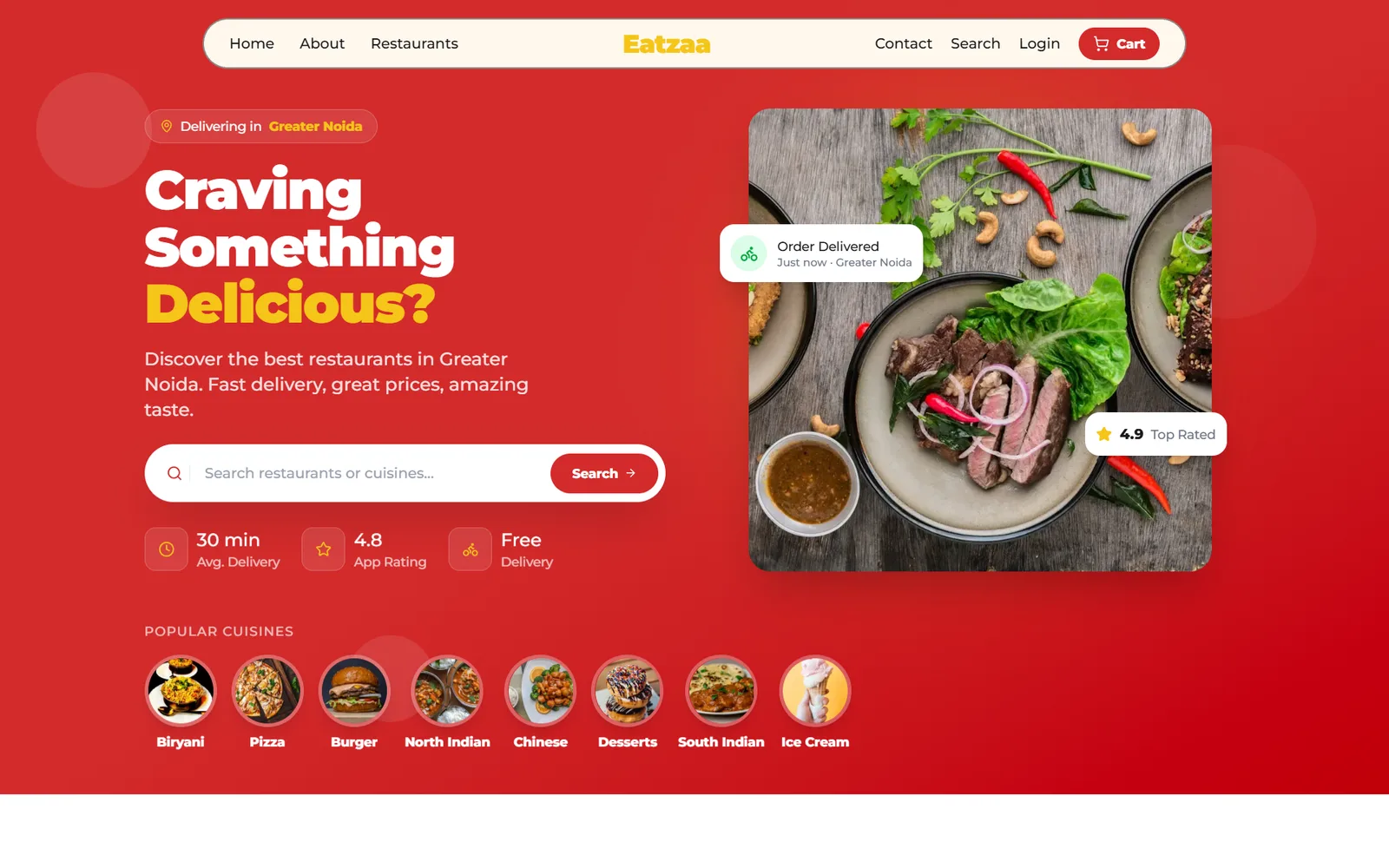
A food delivery platform for Noida: the website and phone app customers order from, and the tools every restaurant, manager, rider and platform operator uses to run it. Five different jobs, one system. It's live and taking real orders with real money.
05
Eatzaa
Food delivery · zero to live
~5
Months from nothing to live
75
Backend endpoints
58
Web pages
62
App screens
A food delivery marketplace for Noida that didn't exist online at all. I built all of the software, from the customer website and phone app to the dashboards restaurants, managers, riders and admins use, plus payments and refunds. Built alone in about five months: 75 backend endpoints, 58 web pages and 62 app screens. It's live and taking real orders.
What it is
The problem
The business didn't exist online at all. No site, no app, no way to take an order.
A customer who can order but can't get refunded isn't a customer, and a restaurant that can't change its own prices won't stay a partner. So the entry price was the whole machine at once: menus restaurants maintain themselves, money that moves safely, riders who get dispatched, refunds that resolve, and someone able to step in above all of it.
What I built
All of the software: the database, the backend, the customer website, dashboards for all four staff roles, the phone app, payments and the infrastructure. The client runs the business itself.
Delivery fees come from the measured road distance between that kitchen and your address, in bands, each with its own free-delivery threshold. Beyond ten kilometres it declines rather than quoting a price it can't honour, and coverage is checked before you build a basket, not after you try to pay.
One place decides what things cost. Tax, discounts, delivery and surge are all computed by a single piece of code, and the app just asks and displays the answer. Promo codes don't stack: you automatically get whichever one is worth more.
Refunds are a real path. Cancel early and you're made whole. Cancel before cooking starts and you get a defined partial refund. After that, a manager and then an admin work through a proper queue, and a human always has the final say.
Payments assume something will go wrong. If the confirmation fails, it retries, and a webhook reconciles it on the server afterwards. The cart empties either way, so nobody pays twice.
Where it landed
A live marketplace serving real customers and partner restaurants, built alone in about five months: five roles, 75 backend endpoints, 58 web pages and 62 app screens, all on one shared set of business rules.